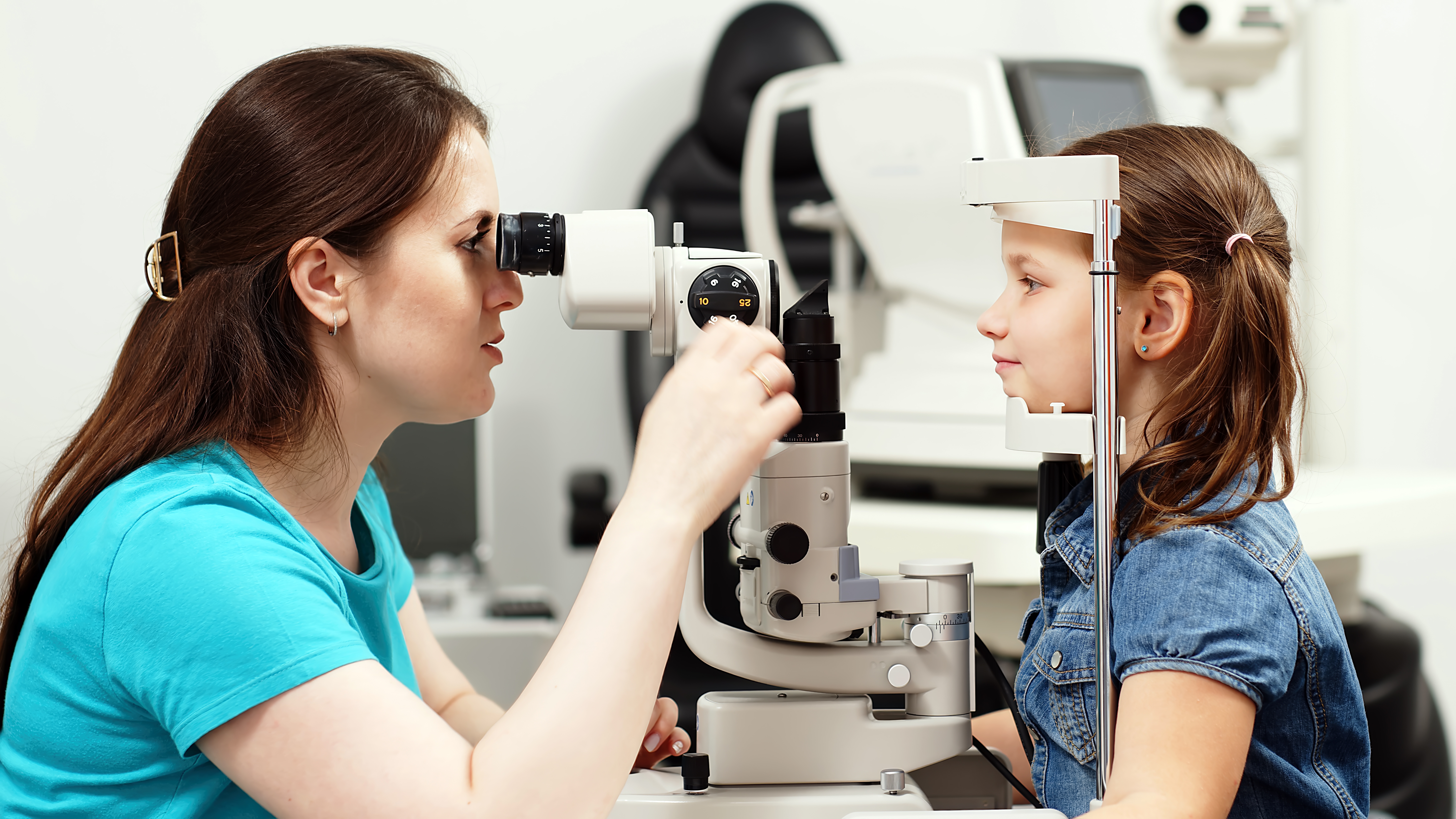

Starting myopia management is an important step toward slowing your child’s nearsightedness, but treatment does not end after the first prescription or contact lens fitting. Because children’s eyes continue growing, regular follow-up visits help us understand whether myopia is remaining stable, progressing more slowly, or requiring an adjustment to the treatment plan.
At Specialty Eye, we provide ongoing myopia management for families in Kirkland and Bellevue. Follow-up appointments give parents useful information about how their child is responding to treatment and whether the current approach continues to support their long-term vision.
Why Are Myopia Follow-Ups Important?
Myopia, or nearsightedness, commonly becomes stronger during childhood. Myopia management is designed to slow that progression rather than simply correcting blurry distance vision.
No treatment can guarantee that a child’s prescription will stop changing completely. Regular monitoring helps us compare current findings with previous visits and evaluate whether the treatment is producing the expected response.
This matters because higher levels of myopia are associated with increased lifetime risks of retinal detachment, glaucoma, cataracts, and other eye health concerns.
What Do We Check During Follow-Up Visits?
The exact testing depends on your child’s treatment and individual needs. During a myopia follow-up in Kirkland or Bellevue, we may evaluate:
Changes in your child’s prescription
Distance vision and overall visual clarity
Eye health and corneal condition
Contact lens fit and comfort when applicable
How consistently the treatment is being used
Whether adjustments to the current plan may be appropriate
These appointments also give parents an opportunity to ask about school vision, sports, screen habits, outdoor time, or any difficulty their child is having with treatment.
What If Your Child Uses Ortho-K?
Corneal molding, often called Ortho-K, uses customized rigid contact lenses worn while sleeping. The lenses temporarily reshape the cornea so many children can see clearly during the day without glasses or daytime contacts.
Follow-up visits are especially important with Ortho-K because we need to make sure the lenses continue fitting appropriately and the corneas remain healthy.
As your child’s eyes grow, the lens fit or prescription may change. Regular visits allow us to identify those changes and determine whether new lenses or adjustments are necessary.
What About Multifocal Contact Lenses?
Children using multifocal contact lenses for myopia control also require ongoing monitoring. We evaluate vision, lens positioning, comfort, and the health of the eye surface while tracking whether the prescription continues changing.
Contact lens safety remains essential throughout treatment. Children should follow the replacement schedule exactly and avoid sleeping, swimming, or showering in daytime lenses unless specifically instructed otherwise.
Pain, significant redness, light sensitivity, discharge, or sudden changes in vision should be evaluated promptly.
How Is Atropine Progress Monitored?
Low-dose atropine eye drops are another option used at Specialty Eye to help slow myopia progression. These drops are typically used according to a prescribed schedule and do not replace glasses or contacts needed for clear distance vision.
At follow-up visits, we can review how consistently the drops are being used, monitor prescription changes, discuss any side effects, and determine whether the treatment plan should remain the same.
Possible side effects can include light sensitivity or difficulty focusing at near, although response varies from child to child.
Can Myopia Treatment Change Over Time?
Yes. Myopia management should adapt as your child grows. A treatment that works well today may eventually need modification based on prescription changes, eye health, maturity, lifestyle, or treatment response.
Regular follow-ups give us the information needed to make those decisions thoughtfully rather than waiting until your child notices that distant vision has become blurry again.
If your child is currently receiving myopia treatment, contact Specialty Eye at 11830 NE 128 St., Suite 1, Kirkland, WA 98034 at (425) 821-8900 or 225 106 Ave. NE, Bellevue, WA 98004 at (425) 454-2028 to schedule their next myopia management follow-up.